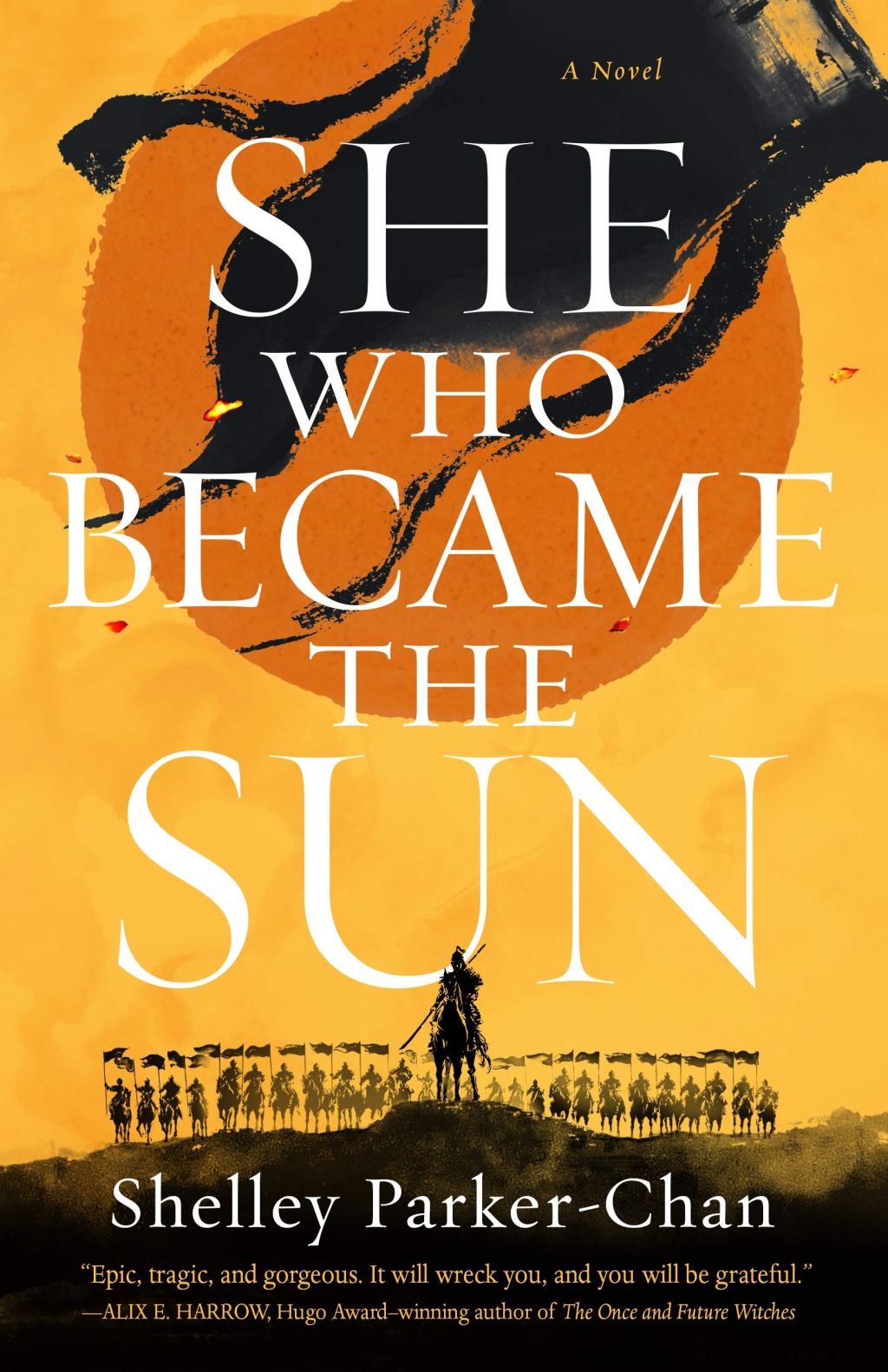
Author: Shelley Parker-Chan
Rating: ⭐⭐⭐⭐ 4 / 5
Medium: Hardcover
Length: 414 pages
Genre: Historical Fantasy
Synopsis
In 1345, China lies under harsh Mongol rule. In a famine-stricken village on a dusty yellow plain, two children are given two fates. A boy, greatness. A girl, nothingness…
But when a bandit attack orphans the two children, it is the boy, Zhu Chongba who succumbs to despair and dies. Desperate to escape her own fated death, the girl uses her brother’s identity to enter a monastery as a young male novice. There, propelled by her burning desire to survive, Zhu learns she is capable of doing whatever it takes, no matter how callous, to stay hidden from her fate.
After her sanctuary is destroyed for supporting the rebellion against Mongol rule, Zhu takes the chance to claim another future: her brother’s abandoned greatness.
My Thoughts (Spoiler-Free)
This was my second read of this book since I wanted to read the sequel soon and it had been years since I last read this one. And I enjoyed the book just as much as the first time. If you’re a fan of historical fictions, with some military themes, like The Poppy War, this book is for you. I was quite familiar with how the story was going to go but this reread did give me more insight into certain characters and events.
The story itself is quite standard when it comes to a historical fantasy; there’s two sides at war and our protagonist finds themselves between the mess. If anything, it’s most fiction than fantasy. The fantasy elements are quite vague. I’m not even sure if there is a real magic system, or if it’s simply a “heavenly mandate” that can be wielded by certain individuals. The story is more about the intricate politics on both sides; small or big leaders everywhere trying to rise higher in power, playing their games of betrayal and manipulation. Among all that is Zhu, just trying to survive. Finding herself in the rebel army, she must do whatever it takes to move closer to her fate. On the other side of the battlefield, however, is a force she is quite unfamiliar with, the feared eunuch general of the Mongol Army, Ouyang. Like Zhu, he is after is own fate as well, fueled by his need for revenge. And when both forces meet, their fates get intertwined in ways neither of them could have foreseen.
It is the characters in the book that play a much larger roles in making it memorable than the plot. Zhu is someone with the ultimate main character energy. It’s not that common to see a main character so sure of her fate of achieving greatness that she refuses to back down from it. And general Ouyang is probably the most complex character in the book. When I first read the book, because of how he was introduced, I just assumed he was the bad guy of the story. But it’s way more nuanced than that. His journey is just as, if not more, fascinating than Zhu’s.
The biggest message in the book is about “wants”. Zhu is quite insistent on the idea that if you want a fate for yourself, you must not be afraid to do whatever it takes to get it. Forget what others think what you should want and never settle with what you have. More specifically, this was to do with women and what the world thinks their roles should be in society vs their own desires that they are often forced to suppress due to myriad of reasons, especially family life and expectations. A great message from a great book.

 Kavi Reads
Leave a comment