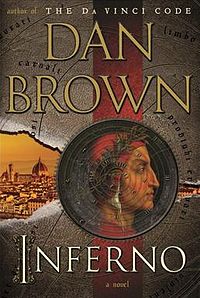
 There have been certain times in the last two years when I started and finished a book in a few hours. But none of them have been over a couple hundred pages, certainly not six. Then again, I should have expected that from a Dan Brown novel. Inferno is the fourth book in Brown’s Robert Langdon series. I read the first three books when I was still in college, so watching Robert Langdon roam around some historical place while explaining the meanings of different pieces of art and symbols felt quite nostalgic. And like the first three, the book was just as hard to put down once I started reading it. With Inferno, I was once again introduced to Brown’s classic style of ending each chapter with a cliff-hanger. Something unexpected happens, a strange character reveals himself, a potential culprit is murdered or a ghastly truth is revealed, all at the end of a chapter leaving the reader on edge and craving for more. And while he receives a certain amount of criticism for having inaccuracies in his artwork, literature and historical references, since I am not even remotely familiar with any of it, it feels authentic enough to be just as interesting as the story itself.
Spoiler Free
After facing the Illuminati in the first book, the Priory of Sion in the second and Freemasonry in the third, this time Langdon faces a different challenge. Instead of an ancient organisation threating to cause chaos, this time against Langdon is a brilliant scientist who is obsessed with only two things: the end of the world and Dante’s Inferno. While the two never meet, given the scientist commits suicide in the first chapter, the chain of events that follow could have major consequences in the world. Convinced that the exponential growth of human population, the scientist threatens the head of the WHO that he might take matters into his own hands mentioning how the Black Plague was actually a boon in disguise paving way for the Renaissance.
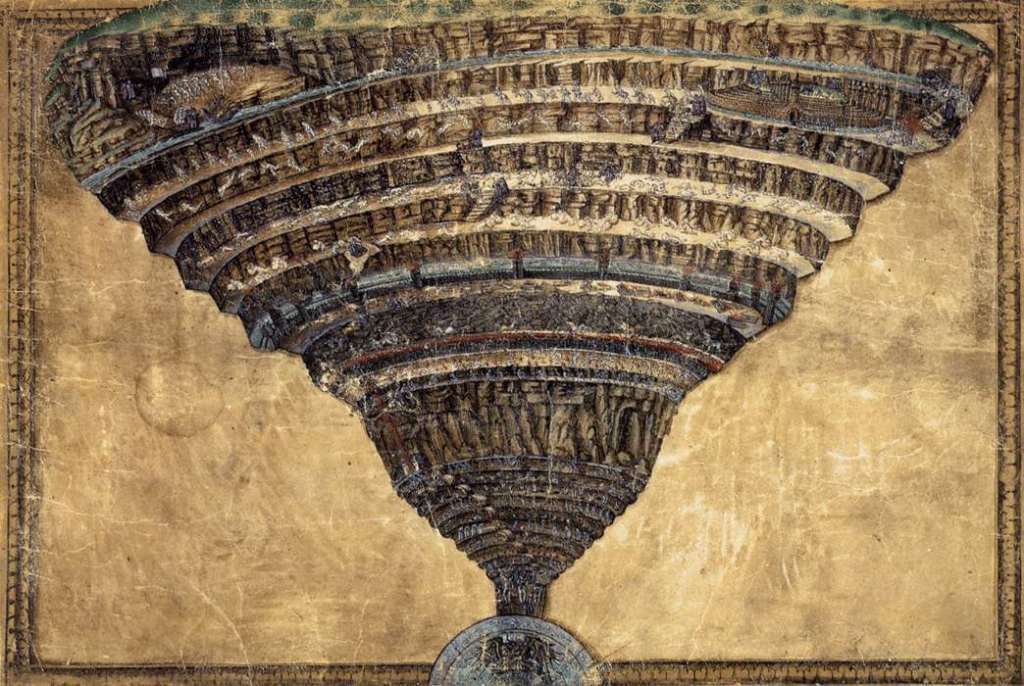
In the first three books, things usually start slow for Langdon until he is called for help due to his reputation and expertise and inevitably gets involved into things far more significant and complicated than he imagined. However, in Inferno, Brown changes things up by kicking things into action right of the bat. Langdon wakes up in a hospital in Florence, Italy with a head wound, supposedly caused by a bullet and no memory of how he got there. Within a few minutes, before Langdon is able to comprehend his surroundings, a spiked-haired woman arrives, kills one of the doctors and approaches Langdon causing him to flee with another doctor, Sienna Brooks. Calling the American consulate, rather than helping, seemed to make things worse sending the American and Italian police forces after them. Together, the duo run trying to solve the mystery that can hopefully make sense out of the whole thing. The only clue they have to begin with is a tiny projector that offers a scrambled version of a Botticelli image, La Mappa dell’Inferno. (a painting based on Dante’s Inferno). Meanwhile, she also tries to help Langdon remember the events of the last two days that have made so many people his enemies. With rich, artistic cities as the setting, and Langdon acting as the tour guide and art critic throughout, the book-length scavenger hunt, a genre that Brown has mastered with this series, is entertaining, thrilling and every other positive adjective I would use for a book.
Spoilers Ahead
I am not usually a fan of plots that are driven by misunderstandings. For me, if all the characters can be brought into one room and all the problems solved, the story loses its charm and thrill. Inferno almost did that. When we find out that the police forces, along with the WHO, were chasing Langdon not to kill him, but to help him, it made me feel like the first 350 pages were a waste. However, by adding the conflicted motives of the provost and the spiked-haired woman, along with Sienna’s betrayal, Brown avoided that trap. In fact, simply knowing that Sienna was actively trying to make sure that the people chasing them don’t get to Langdon and tell him the truth made it better.
The only disappointment in the entire book was the ending. With Zobrist’s virus out in the open and the world’s population at risk of an essentially untested, dangerous gene-manipulating virus, everyone was a little too calm about it. Moreover, the problem was left unresolved at the end, with only the prospect of discussions on how to deal with it. But then again, as in the real world, overpopulation is a very sensitive and complicated issue to deal with and no simple solution is possible.


 Kavi Reads
Leave a comment