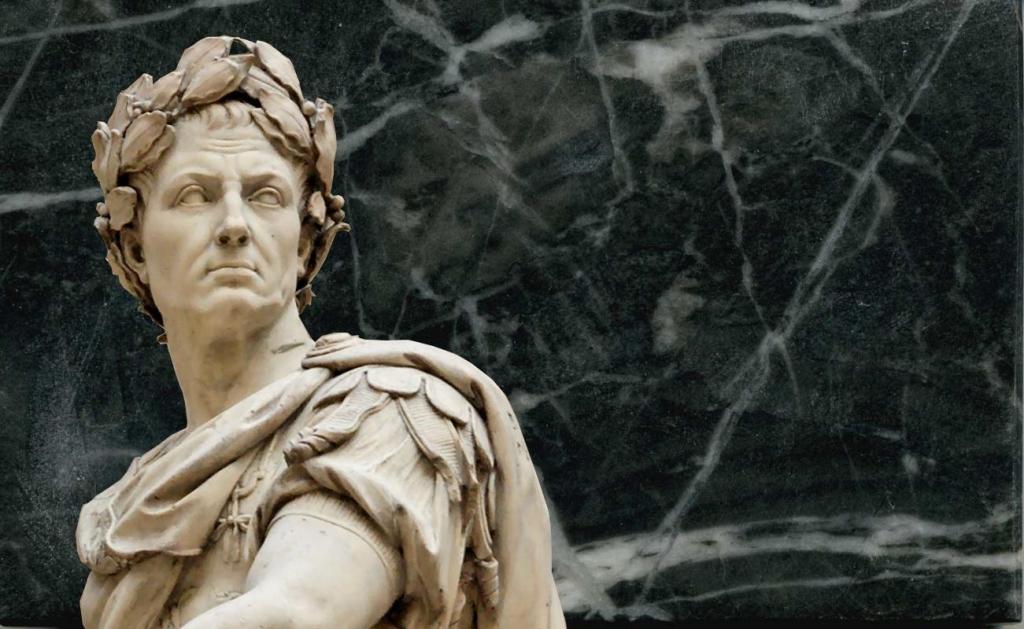
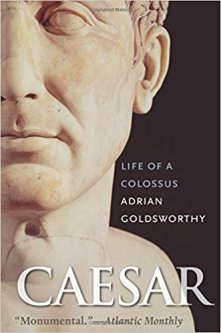
 Julius Caesar was one of the most famous men to ever live that I knew almost nothing about. Whatever little I knew of him was from reading Asterix comics as a kid (and occasionally as an adult). From what I could tell, he was a legendary military general and leader, who got assassinated (spoiler alert). So I was very excited to dive deeper into his story and how he helped shape the Roman empire that lasted centuries after his death. Caesar, Life of a Colossus by Adrian Goldsworthy was the perfect compilation of all the notable events from Caesar’s life, written in a highly readable fashion, with just the right balance of speculation and facts. Goldsworthy truly managed to bring life into such an old character; it is hard to believe that the events happened over two thousand years ago. After reading the book, it was clear to me why the name Julius Caesar demands instant recognition and still commands attention and respect that he received when he was alive.
The book is divided into three parts: Caesar’s early life, his conquests in Gaul and his life as the dictator of the Roman republic. What was surprising about learning about his early was how uneventful it was. Caesar’s rise to power was certainly not guaranteed. He came from an undistinguished family and his initial political appearances were unexceptional. That being said, Caesar did manage to bring attention to himself when, at only 17, he decided to work against the then dictator, Sulla. Another story that brought him some early fame was his kidnapping by some pirates. The story says when his captors named a ransom price for his release, Caesar thought the number was insultingly low and insisted a greater sum be demanded. Eventually, the higher figure was raised and Caesar was freed. Soon after, he sought revenge against his former captors by commandeering a group of ships and men to help him hunt down and swiftly capture them, who he then had executed. He also was notorious for having affairs with many married women, particularly those married to his political allies and rivals. When he formed the First Triumvirate with Pompey the Great and Marcus Crassus, it was speculated that Caesar slept with both their wives at some point, which I thought was quite comical. There were probably quite a few awkward moments between them, especially since Pompey went on to marry Caeser’s daughter, divorcing his wife for her infidelity… with Caesar.
As a private citizen, Caesar often took it upon himself to keep the peace in Roman lands, often putting together his own armies using his personal fortune to drive off any plunderers that were harming Roman allies. But none of this compares his Gallic campaigns, the second part of the book. While I found the mostly political first part not as interesting, I was glued to the book during this part. From his military glories to gambles that almost cost him everything, the author outlines this part of Caeser’s life in an excellent fashion. Everywhere Caeser went and anyone he fought, whether it was the Helvetii (Swiss), Germans, or the Gauls themselves, it was always Veni, Vidi, Vici. And it was never easy. Each battle shows Caesar’s exemplary skill as a military commander and the loyalty and battle prowess of his army, along with what could have been massive failures for him. Out of these, the most famous ones were the Gallic revolt and victory of the Gauls in the battle of Gergovia under the leadership of Vercingetorix, and Caeser’s subsequent victory in Alesia, each described in detail by the author. The battle of Alesia marked the end of Gallic independence in France and Belgium and Caesar officially became the hero of Rome. Being a hero comes at a cost, however; especially when there already is a hero previously named. In the third part of the book, we see a mix of politics and war, as we see Caesar fight against his former ally, Pompey the Great in a great civil war. Later, we also dive into his African and Asian conquests, his meeting with Cleopatra and his path to become the dictator of Rome and solidify his position as the greatest and most famous Roman leader in history.
With constant reference to Caesar’s own Commentaries on the Gallic War, we dive deep into Caesar’s mind and strategies throughout the book, making the biography all the more captivating. Goldsworthy managed to find the perfect balance between an academic textbook and a Hollywood action story and I would highly recommend this book to anyone looking to read a fascinating story about a fascinating man.


 Kavi Reads
Leave a comment