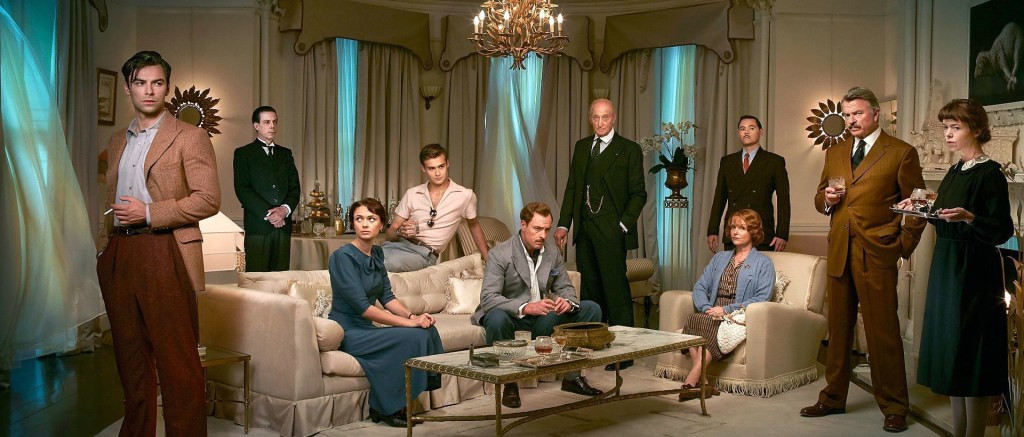
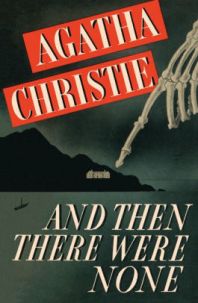
 There are some books that we just can’t let go off. Chapter after chapter, our eyes stay glued to them and our hearts are completely engrossed in the story. When I first read it in late 2017, And Then There Were None was one of them. It comes as no surprise to me that it is the world’s best selling mystery, with over 100 million copies sold. Though I wouldn’t really classify it as a mystery. I thought it was straight up horror. In fact, it was a level above what we usually consider horror. We all know zombies and ghosts aren’t real. But murder is very real. And I cannot imagine anything more terrifying than knowing that you could be killed at any point by one of the people you are with, but you don’t know which one. That was essentially the premise of the book.
No Spoilers
The book starts off by introducing us to each character one by one. Each is on their way to Soldier Island, invited by some personal friend, or for an employment opportunity. While none suspect anything, instantly the reader can tell something is off about the whole situation since each has a completely different reason they are going to the island. And while most of them seem like ordinary people, for some, a darker event in their past is hinted at. After meeting each other, and eating their first meal together, to their shock, a gramophone record is playing with a godlike voice accuses each of murder and asks for their defence. Confused and startled, each, except two, immediately denies the charges. (The reader shortly finds out that all the accusations are quite true, as we peer into the thoughts of the characters.) Unsure what is the true meaning behind the accusations, the group discovers that no one actually knows their supposed host, U.N. Owen (a play on “unknown”). Before they could form any conclusions, Anthony Marston, one of the people who did not deny his charge, collapses and dies, presumably from cyanide poisoning. The group dives deeper into confusion and wonders why the arrogant, full-of-life 23-year old supposedly committed suicide. It was not until another dies in her sleep that the seriousness of the situation dawns upon them. Two suicides in one night seemed too much of a coincidence. And when a third dies, this time from a blow to the head with a blunt object and their suspicions turn into reality: Mr Owen brought them to the island to kill them all.
When the group first arrived at the island and went to their respective rooms, each had a nursery rhyme framed up: Ten Little Soldiers. While not thinking too much of it in the beginning, the group soon realise the importance of the rhyme. The deaths are occurring in accordance with the words written (in the first death, Marston “choked his little self”, in the second, Mrs Rogers “overslept herself”, and so on). Clearly, they were dealing with a lunatic. To make matters worse, when they conduct a full-scale search of the island to uproot Mr Owen, they quickly find out that there is no one on the island but them. It doesn’t take them long to realise that only means “Mr Owen” is one of them. This is when the real thriller starts. Everyone becomes distrustful of everyone. You see human nature degrade to basic animal instincts. While judge Wargrave takes charge of the situation and tries to keep things in order, as more “soldiers” fall, things keep getting worse and worse. Everyone lived in constant fear for their life, keeping a keen eye on each other, suspicious of every move. As a reader, the story had taken a definite turn towards true horror and kept the thrill to the point that I couldn’t let the book go until I knew what happened next.
Christie had to work very hard on this book. Not only she had to follow the rhyme, but also make all the murders believable and keep a high level of drama through the book. Clearly, a book that would be difficult to execute, Agatha Christie does it brilliantly and the book deserves its praise and critical acclaim. A group of characters cut off from the outside world with a murderer in their midst might be considered a Hollywood cliche at this point, but Christie was the first to do it. The book isn’t only her most sold novel, but also the most adapted one. When I first read it, I finished And Then There Were None in four hours without putting it down; a completely terrifying and thrilling experience. I had been looking forward to a second read for quite some time, and despite knowing the ending, the thrill was still very much there. It has an absolutely brilliant, surprising ending that I did not see coming at all. An absolute 5/5.
Spoilers Ahead
Speaking of the ending, I, first of all, figured that the rhyme would be followed till the end and everyone will die. Since the last soldier in the rhyme hangs himself, and since we are obviously dealing with a slightly deranged killer (murdering people based on a nursery rhyme is pretty out there), I could see them believing they fulfilled their duty and killing themselves. However, when I saw that Vera was the last one left, and it was pretty clear that she was not the killer, I then thought that maybe that was the killer’s plan after all. The person at the end would be so drained from the constant fear and the sudden relief coupled with the guilt of the accusation made against them would be enough to make them end it all. And that’s what happened. Vera did exactly that, thinking of the child she drowned. But then Christie dropped a bomb on us at the very end. Vera stood on a chair to hang herself, then kicked the chair to end it all. But the police found the chair stood in its place, at the dining table. If everyone on the island was dead by the time Vera committed suicide, who put the chair back?

 Kavi Reads
Leave a comment