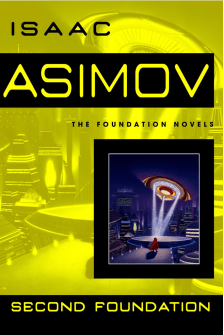
 Another week over, another Asimov book down. And so far it might be the best one. With fantastic characters combine with the thrill of space along with the entire Galactic Empire on the line, Second Foundation is the last book Asimov published in the 50s before he took a hiatus from the series until the 80s when, due to high demands from fans and publishers, he came back with Foundation’s Edge. So, effectively the novel forms the finale of a trilogy. And it suitably completes the series. Asimov continues to defy conventional science fiction, with big space battles happening in the background while the real story progressing with a few main characters. The true thrill comes from the same characters and the situations they are put in and more importantly how they get out of that situation. Asimov has a knack of getting you completely invested in characters, whether it be the tyrant leader “The Mule” or the spunky teenager Arkady.
A little back story. The Galactic Empire was dying. Decaying from centuries, there seemed nothing anyone could do to avoid the tens of thousands of years of barbarism that would follow before a second empire is formed. But, one man saw it coming: Hari Seldon. Through the mathematics of psychohistory, Seldon predicted the fall of the Empire and to reduce the barbarism to a mere thousand years, formed two organisations. The first, called the Foundation, comprised of a small group of scientists on a planet at the edge of the galaxy and slowly grew in power until it even defeated the Empire itself. The second was more secret, with no mention of its location or any other information. The last book, Foundation and Empire ended on quite the predicament. With the Empire defeated, and Seldon’s plan back it, there seemed to be nothing in the Foundation’s way. Then the Mule showed up on the scene. With his mutant mind-controlling powers, it brought all his enemies, including the Foundation to its knees. And then he went out to look for the second Foundation, to destroy it and establish his dominance in the galaxy.
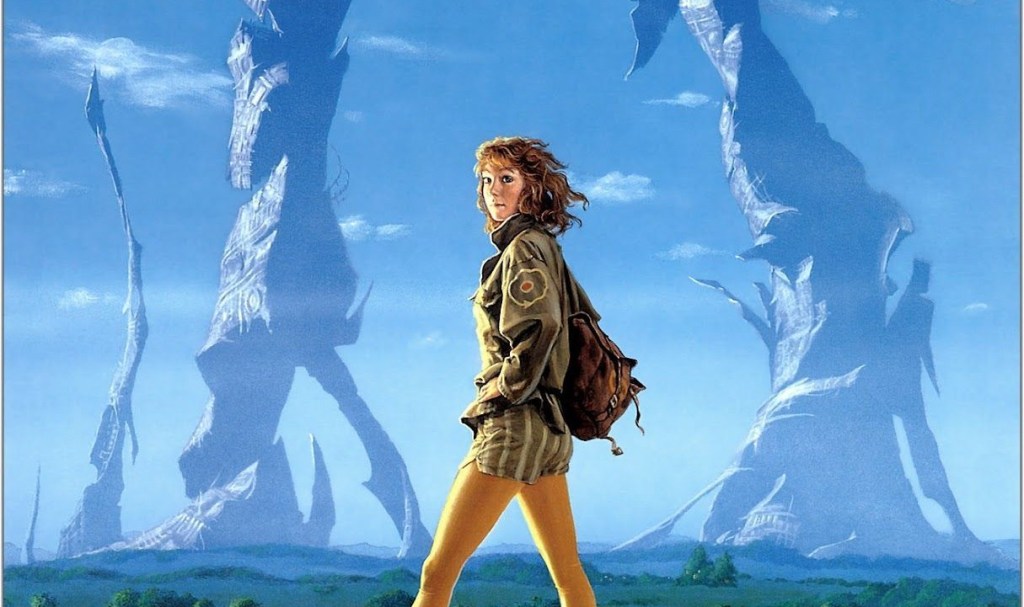
The Mule’s hunt for the Second Foundation is what comprises the first part of the novel, while Arkady’s (the granddaughter of Bayta Darell, the heroine who previously foiled the Mule’s plans to locate the Second Foundation in Foundation and Empire) adventure to locate the same forms the second. In both we see completely different strategies applied. With mind-controlling beings involved, no one can truly be trusted and anyone can be a double-crosser or a double-double-crosser ad infinitum. While the Mule, with his supreme powers, can be more daring in the face of the Second Foundation, Arkady has to be a lot more careful and clever.
The lack of space battles is not the only thing where Asimov does not follow convention. There is also a lack of extremes. There are no “good guys” or “villains”. The reader is left on her own to decide whom to root for if that’s even possible. The Foundation starts out nice but grows into a corrupt and stagnant kingship. The Mule seems a tyrant at first but is a surprisingly sympathetic character (also my favourite character in Asimov’s books so far). And the Second Foundation seems a benevolent organisation bent of saving Seldon’s plan but is also a big brother-like institution which doesn’t contravene disregarding free will and mind-controlling people to make sure they stick to the plan. Arkady’s perfect though.
The Foundation novels, while form a great science fiction series, are not perfect. The complete lack of big space battles or adventures can, at times, leave the reader with a very talky story with pages and pages of discussions leading to a quick end. While the Mule adds a great touch of unexpectedness into the book, even his search of the Second Foundation, while initially sounding like a promising tale, constitutes a fairly dry section, where the Mule only shows up at the very end to confront the leader of the Second Foundation. Arkady’s story, in this regard, is much more enjoyable with plenty of intrigue, action, and crisis. The ending feels a bit rushed but is satisfying as the end to a series.
So if you haven’t read this series yet, I recommend you get on it. While it may have some flaws, it remains a classic of science fiction and one of the most brilliantly original series available.


 Kavi Reads
Leave a comment