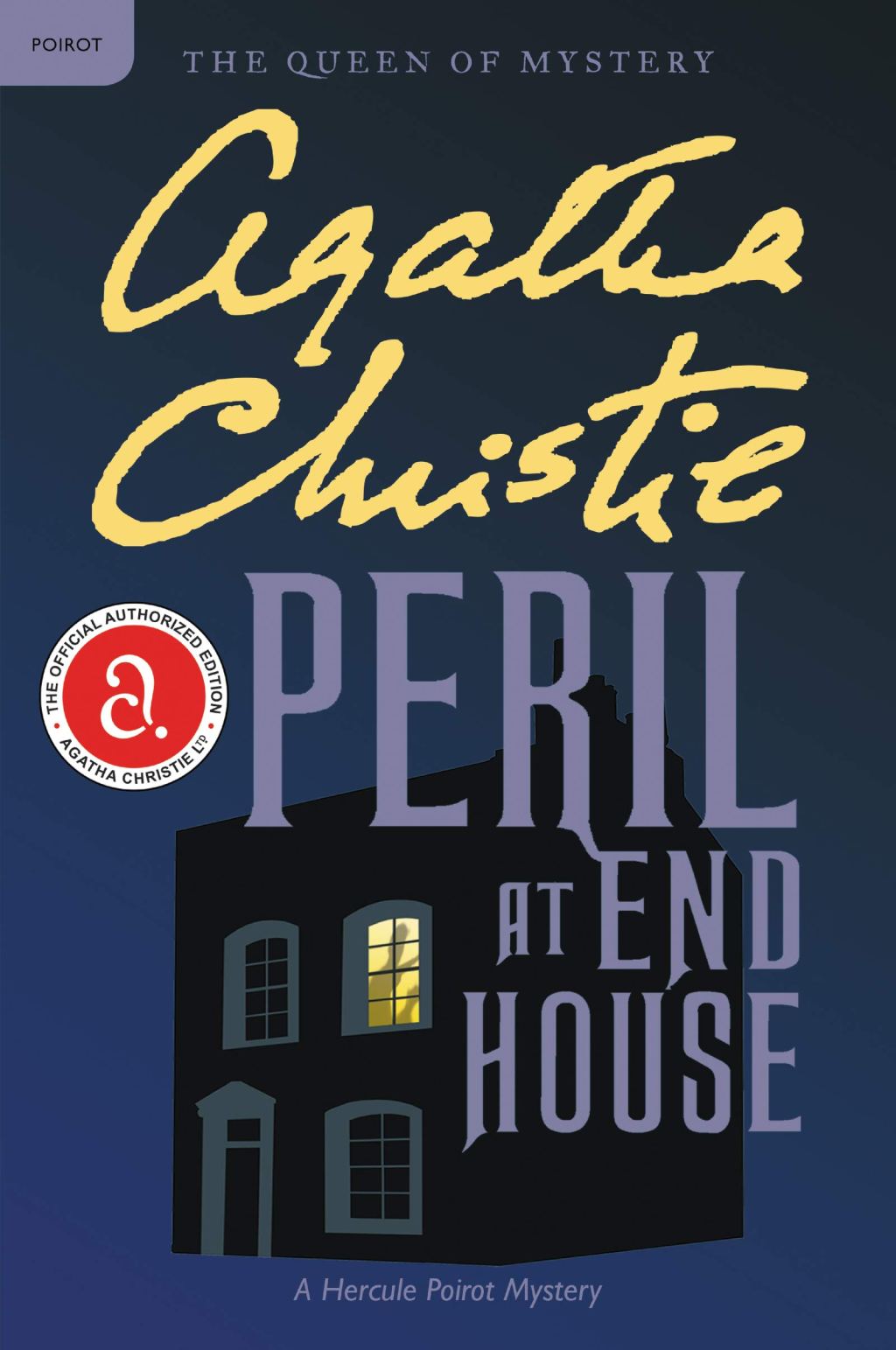
 There are several reasons Agatha Christie’s Peril At End House will always be memorable for me. Firstly, I listened to the audiobook version of it, the first hour-and-a-half of which was on my first 8-mile run of the year, which was very exciting. And that meant I had quite some time with the book without too many distractions. In fact, now anytime I run on that route, the story replays in my head.
Next was the characters. I’ve always loved Poirot’s character, but this book showed a different side of him. Usually, Poirot remains quite vain in his abilities, constantly praising his little grey cells to Hastings’s annoyance. But this book showed him doubt himself, make mistakes, wallow in self-criticism, regret his overconfidence. It was a much more interesting journey to see how he goes in and later gets out of that. And helping him get through all that was his ever-so-faithful (though slightly jealous) friend and partner Captain Hastings.
And then there was Nick, the book’s other primary character. She was very different from the typical female characters in Christie’s books. Her energy was incredible. And despite being under threat of being murdered throughout most of the book, she took with an unusual nonchalance, amusement even. It was very refreshing.
And finally, was the classic Agatha Christie twist at the end. Not only was it ingenious, but everything is fair and it is possible to guess the solution of the puzzle fairly early in the book. I know this because I did! For once, I was able to discover the solution around halfway through the book, when Poirot was still cursing himself because of the way things were going. As the book progressed, Christie threw things that made me doubt my theory. But in the end, I was right all along. More on the in the spoilers section.
No Spoilers
The story starts at a Cornish resort, where Poirot and his friend Hastings are talking to Nick Buckley, as she describes three events that almost cost her her life, from boulders almost crushing her to her car’s brake failing; all seemingly accidents. It all seems like fantastic coincidence until Poirot discovered that a bullet had gone through in her sunhat, something Nick though was a wasp. Convinced someone is after Nick’s life, Poirot comes out of retirement to protect her, despite her insistence that she is in no danger. The question is, can he find the would-be-killer and prevent the crime before it is committed. As Poirot himself said, a murder involves some certainty. The killer has signed his name, and it is something Poirot has plenty of experience with. But a case like this is riddled with uncertainty. This adds a level of intensity and thrill to the book that I had not seen until now in a Poirot mystery, and what added to its appeal.
Spoilers Ahead (like, the end)
As I said above, I guessed the twist at the end and realised who the true murderer was well before Poirot. And the funny thing is, I did exactly as Poirot would have (and, in this case, should have) done and always insists on. I looked at the facts methodically. There were two principles, that Poirot usually sticks to when on a case, that I used. One is that the simpler solution is more likely to be the right one. When you look at the events as they occurred, Maggie is dead. That’s it. Everything else is just a theory, heavily based on Nick’s word. Which brings me to the second principle that Poirot usually follows: everybody is lying until proven otherwise. I was surprised how readily Poirot was taking Nick’s word for everything and how it seemed wrong to do so.
This made me realise that if Nick wanted Maggie dead, what better cover than make everyone believe that Nick herself was the intended target. I’ve read/seen similar detective stories before, where the murderer used the detective himself as a witness, thereby completely driving suspicion away from themselves. As to the motive, it didn’t take long to realise that if Maggie was the one engaged to Michael Seaton, since he’s dead and had no other family and with Maggie out of the way, no one would question Nick if she pretended she was the one engaged. And that was it. There were other intricacies that didn’t occur to me that Poirot cleared up, but for the first time in a Christie novel, I got the primary solution on my own.


 Kavi Reads
Leave a comment