
 Terrorism in the Middle-East, extreme poverty in Africa, overpopulation in Asia, climate change… the world just seems like a horrible place right now. But is it? When I read the books by Steven Pinker (The Better Angels of Our Nature and Enlightenment Now), I was convinced otherwise. Pinker used meticulously compiled statistics and data to prove that the world is the least violent it has ever been and much of our progress is hidden behind our own misconceptions. But why is that? What makes us blind to the fact that the world is the best it has ever been. For that, I turned to Hans Rosling’s Factfulness. While it took Pinker two giant, 700-page books, Rosling managed to give us his reasonings, stories and data in just over 250 pages. In a beautifully written and easy-to-read book, Rosling describes ten biases, or what he calls instincts we have that block our mental pathways and make us reach conclusions that are wrong and how we can avoid them to think clearly about situations.
Rosling starts the book with a little quiz of fifteen general multiple-choice questions ranging from what is the life expectancy of the world today to how many people have access to some electricity. Over the years, he has put hundreds of such questions in front of leading experts in various fields. And the results were shocking, ranging from 5 to 20% of people getting the answer right. In comparison, chimpanzees picking answers at random would get the questions right 33% of the time (since each had three choices). Why do the experts fare worse than chimps? It can’t be due to ignorance. By definition, these are experts, with access and knowledge of all the data in the world. The answer is the pre-conceived notions that we carry with ourselves. This is what Rosling addresses in this book.
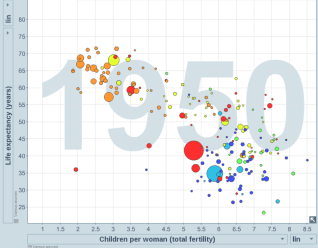
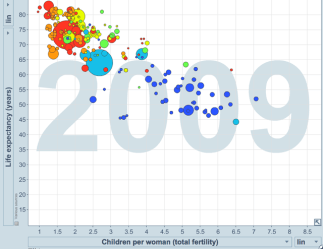
Growing up in India, in school, I was always taught about two distinct categories that the various countries are divided into: the developed and the developing world. It was always “us” and “them” (which later flipped when I moved from a “developing” to a “developed” country). The base of Rosling’s book is how outdated these labels are. The idea may have been valid in the 1950s, but today, any distinction that puts China and Somalia in the same category is clearly too broad. Instead of dividing countries into two, Rosling instead divides the people living in all countries into four categories (or levels) based on their income levels and gave them simple names: Levels 1, 2, 3 and 4. Each nation in the world has people from all four levels, though in different proportions. Using this as a base, he goes on disproving many other instincts such as the fear instinct (we pay more attention to the one airplane crash than the million successful flights) to the generalisation instinct (we think of Africa as one entity and not as the dozens of different countries) to the gap instinct (we tend to categorise most people to two extremes, like developed and developing). With each one, he offers practical advice about how to overcome our innate biases.
My favourite part of the book was not just the data and reasonings Rosling provides in an easy and accessible manner, but the way he does it. Rosling was a Swedish physician academic, and public speaker who had studied, practised and spoke all around the world, from Europe to India to various African countries. Before describing each instinct and making his point against it, he introduced it with a short story from his lifetime. He would almost casually mention stories that could be entire books themselves, like the time he was in a district in Mozambique and was responsible for the health of all the children of the entire district at a time when Mozambique’s child mortality rate was 26%. Or the time he independently went to Liberia to help fight the Ebola threat and stayed there for three months. Such stories not only give life the to data but also helped dive deeper into Rosling’s mind and give a taste of the life he led and the experiences he had. I take Bill Gates’s recommendations very seriously, and when he called Factfulness a fantastic book that everyone should read, I jumped right on it (as soon as it was available in my library). And it truly was a fantastic book that I would also recommend everyone should read.
Bill Gates’s Review: https://www.gatesnotes.com/Books/Factfulness
Some TED talks by Rosling:


 Kavi Reads
Leave a reply to 2018 in Books (Part 1) – Kavish Cancel reply