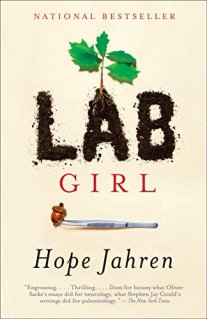
 Recommended to me by a student from Germany on a postcard through Postcrossing, Lab Girl immediately sounded like the perfect book for me. A book not only about science but the life of a female scientist already seemed fascinating. But Lab Girl turned out to be so much more than that. I don’t know what my favourite part about the book was; the amazing adventures and experiments she has had with her lab-partner Bill or the way she describes trees, putting so much life into these seemingly static objects.
A memoir of a girl who becomes a scientist, Lab Girl is Hope Jahren’s story as she builds labs from scratch and faces endless battles in the field of science of getting funding, failed experiments and recognition. More than that, it is a story about an ever-lasting bond between two people, whose only goal in life is to stay locked in a lab and work. And encompassing all that is the wonderful tour of the life of trees as they from seeds, with astonishingly low chances of success, to monuments that can last centuries, providing the world around them with life. It’s a powerful and unusual way to tell a story, and I admired the art behind it. Mostly, though, I love this book for its honesty, its hilarity and its brilliant sharp edges.
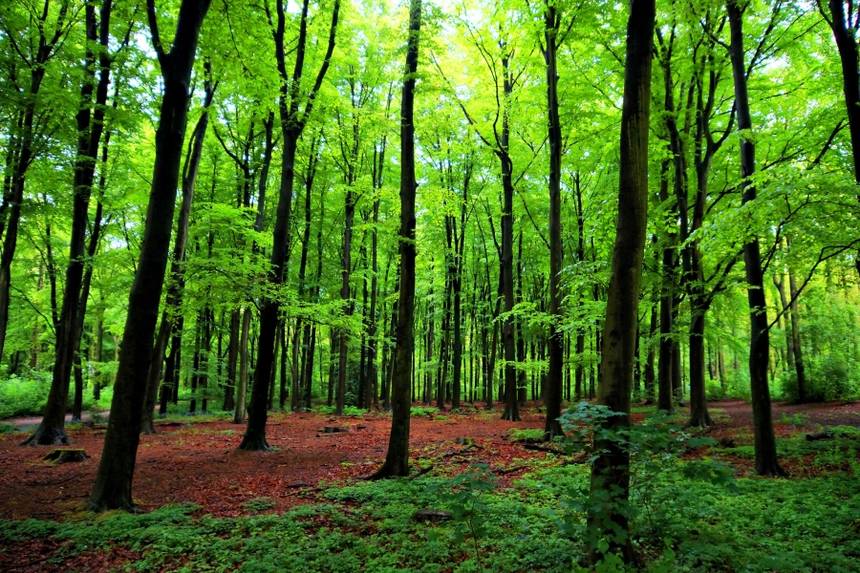
The story starts in a quiet Scandinavian household, where Hope grew up with a scientist father and a literary graduate mother. This is where the spark of science in her life began, as she found comfort in her father’s laboratory and was allowed to play with all the “toys”. For her, science and play are interwoven from a very early point in her childhood. Concurrently, she also starts talking about seeds and their impeccable patience. A seed can only sprout when the conditions are perfect. Until then, it just waits. And only a few in a million seeds ever actually get the chance to simply sprout. This is why a single oak tree produces hundreds of thousands of seeds. The rest of the book follows suit, as she tells different tales from her life along with parallels in a tree’s life.
Throughout the book, there were a number of key moments that stuck with me. The first one came quite early when Hope was working in a hospital and described her chain-smoking boss: “She did not replace my mother; no one could do that; but she came into a vacancy in my heart, which closed upon her.” It made me smile as I thought of a very similar person in my life. Another was her description of her very first true scientific discovery. There was a moment in time when Hope Jahren was the only person in the entire world that knew that hackberry pits contained opal. It didn’t matter that the discovery was fairly trivial or that her seniors later said they could’ve guessed that. It was her discovery and the true joy she expressed when describing it was a delight in itself to read. This was when she knew science was for her.
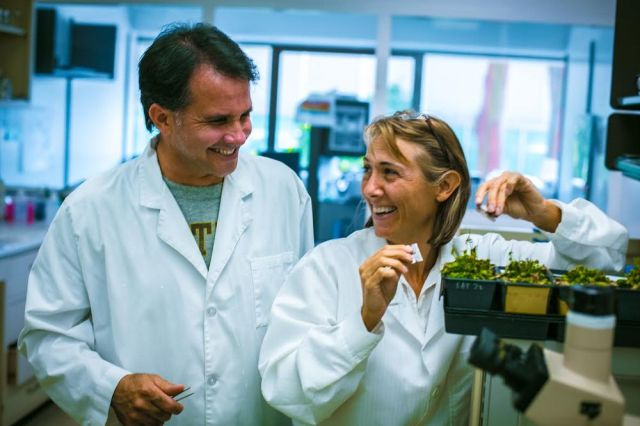
During her time as a graduate student, she met Bill. From the time they met, it was clear that they were different, and they would live cherishing the similarity of that difference for the rest of their lives. For Hope, Bill was the smartest guy in the class. No matter where she was, she made sure to pull as many strings as she can to employ him in her labs. For his part, Bill stays loyal to her during her worst times, even if it meant sleeping in his car, or under his desk. (In fact, his strong sense of loyalty was quite apparent when he, for the only time we see in the book, lost his temper when a research student contemplated abandoning the group and taking a flight home when their car got in an accident.) Together, Hope and Bill have the craziest adventures in the name of science, as they scour Salvation Army stores to find old camping equipment to use in their first lab, take students on some hilariously awful field trips or burrow through rotting leaves in the Canadian Arctic.
But Hope’s life has not been just a long, fun shift in a lab, following her passions. A darker side is put forward when she talks about her mental issues. A workaholic who also had manic-depression, Hope dedicates a short chapter simply describing her mental state as full-blown mania hits. It reminded me a lot of a chapter I read a long time ago in A Brief History of Seven Killings containing the thoughts of a man as he was being buried alive. Even Hope, herself, said that her mania let her “see the other side of death“. And things get much harsher when she gets pregnant and is not allowed to take any medication for the first two trimesters. This was also the first time in the book we see some of the sexism she faces as a woman in science as her department head essentially bans her from the lab she built from scratch because she’s pregnant, worried about some sort of liability or insurance or some other lame excuse to hide his inability to work with the first person in the lab to even require maternity leave. Of course, once the baby arrives, all that goes away, and she is simply left with another little experiment she gets to be part of, to “watch him grow, give him what he needs, and let him take my love for granted“. So many lines I can quote from the book.
At the end of the day, the theme of Hope’s beautiful book is survival. Whether it’s a seed that has a 5% chance of sprouting, then another 5% to make past the first year, or a woman working in a competitive field labelled “curiousity-driven science” and therefore comes last in line for funding, or simply surviving in the world with your mental issues with support and care from loved ones. Hope Jahren, clearly, has amazing literary talents to go with her scientific brain.




 Kavi Reads
Leave a reply to 2019 in Books – Kavish and Books Cancel reply